
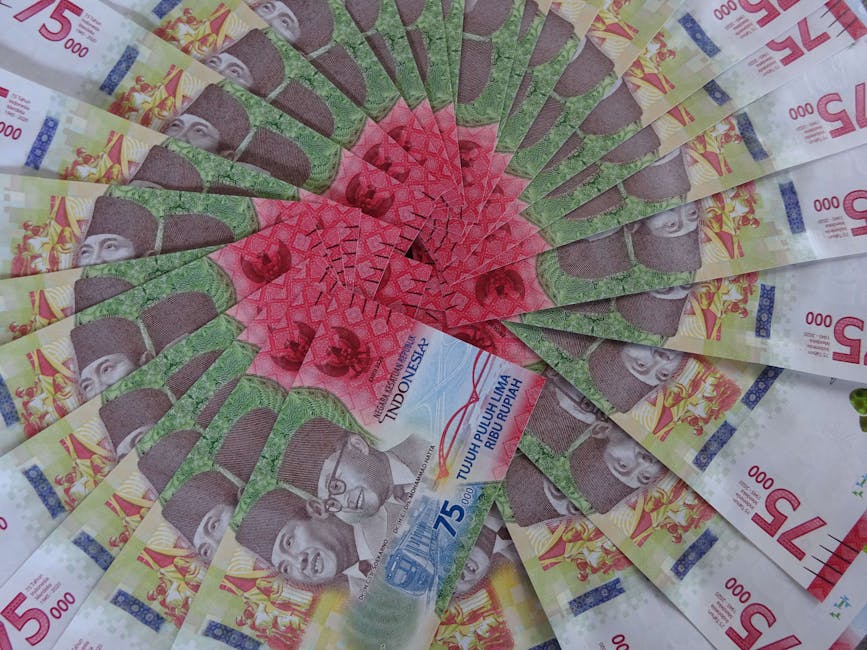
In the second quarter of 2026, Americans were sitting on $1.26 trillion in credit card debt, according to the Federal Reserve Bank of New York's Household Debt and Credit Report. In that same window, Indonesia's gross domestic savings rate touched 37.8 percent of GDP, per CEIC data drawn from national accounts figures. Two economies, two completely different relationships with money, happening at the exact same moment. That contrast isn't an accident of policy or income level. It comes from something deeper: how each culture answers the question of who is responsible for catching you when you fall.
The 91-Point Gap That Explains a Lot
There's a framework economists and cross-cultural psychologists keep returning to when they try to explain gaps like this: Hofstede's individualism index, a measure of whether a society expects you to fend for yourself or expects your extended family and community to absorb your shocks. The United States scores 91 out of 100, the highest of any country ever measured. Indonesia scores 14, among the lowest in the world.
That's not a trivia fact. It's the hidden logic behind almost every financial statistic you're about to read. In a high-individualism culture, the socially expected response to a financial emergency is: build your own buffer, invest in your own account, solve it yourself. In a low-individualism culture, the expected response is: lean on your family, your neighbors, your arisan group. Neither instinct is irrational. Each is a rational adaptation to what people around you actually do when things go wrong. The problem is that both instincts create blind spots, and the data shows exactly where.
Why So Many Americans Are One Paycheck From Trouble
Ask yourself this: if your income stopped tomorrow, could you cover three months of expenses without borrowing? According to the FINRA Foundation's 2024 National Financial Capability Study, only 46 percent of American adults can say yes. That's down from 53 percent in 2021, reversing more than a decade of slow, hard-won progress that started after the 2008 financial crisis. The drop isn't evenly spread, either. Among households earning under $25,000, just 22 percent have that cushion. Among households earning above $75,000, 66 percent do. Younger adults fare worse too, with only 36 percent of those 18 to 34 holding three months of savings, compared to 59 percent of adults 55 and older.
Meanwhile the personal saving rate, tracked monthly by the U.S. Bureau of Economic Analysis, has hovered between 2.6 and 4.5 percent of disposable income through 2026. That's a country earning and spending on a self-reliant script but without the buffer that script assumes exists. When the cushion isn't there, credit fills the gap. Total household debt hit $18.8 trillion by mid-2026, and credit card balances alone climbed toward $1.28 trillion, with late-stage delinquencies (payments more than 90 days overdue) nearly doubling between late 2022 and early 2026. Researchers at the New York Fed have started calling this pattern a "K-shaped economy": one branch of households doing fine, another falling further behind, both counted in the same national averages.
Stock ownership tells a similar story of a widening split rather than broad participation. Gallup found 58 percent of American adults owned stock as of April 2026, down from 62 percent the year before, marking the first real decline in nearly a decade. Ownership sits at 87 percent for households earning six figures and just 28 percent for those under $50,000. Individualism, in other words, works best if you already have enough individual capital to be individualistic with.
Indonesia's Safety Net Isn't a Bank Account, It's a Family
Now flip the picture. Indonesia's most recent Survei Nasional Literasi dan Inklusi Keuangan, jointly run by OJK and BPS, put the country's financial literacy index at 66.46 percent in 2025, up from 65.43 percent the year before, while financial inclusion, meaning actual use of financial products, reached 80.51 percent. That gap between literacy and inclusion is worth sitting with for a second: more Indonesians are using formal financial products than fully understand how they work, which is the opposite pattern from countries where literacy runs ahead of access.
There's a regional story hiding inside that number too. Urban literacy sits at 70.89 percent versus 59.60 percent in rural areas, and the inclusion gap follows the same shape. Older residents (51 to 79) and the youngest working-age group (15 to 17) trail the national average as well. What holds the system together across those gaps isn't a formal safety net in the American sense of an emergency fund sitting in a bank account earning interest. It's the extended family, informal savings circles like arisan, and a broader social expectation, gotong royong, that people pool resources when someone needs help. It doesn't show up in a personal savings account, but it functions as insurance all the same, and it partly explains why Indonesia's gross savings rate at the national level, 34.66 percent of GDP in 2024 according to World Bank figures, dwarfs the equivalent U.S. figure of roughly 18 percent for the same year. Households, businesses, and government together are retaining far more of what the economy produces, even if that saving doesn't sit in any single person's checking account.
A Tale of Two Emergencies
Picture two workers, each earning the equivalent of $600 a month, who both lose their job without warning. The American worker, following the script of self-reliance, checks their savings first. Odds are close to a coin flip that there isn't three months' worth there, so a credit card at roughly 20 percent average interest becomes the bridge, and the debt compounds while the job search drags on. The Indonesian worker, following a different script, calls family first. There's no interest charge, but there's a social ledger: favors owed, expectations of reciprocity down the line. Neither path is free. One costs money you can measure in a statement. The other costs something harder to price, but real all the same.
The Quiet Convergence
Here's what's shifting the picture: Indonesia's younger generation isn't just leaning on family anymore. The Indonesia Central Securities Depository (KSEI) recorded 20.32 million capital market investors by the end of 2025, up 37 percent from 14.87 million a year earlier, with stock and securities holders specifically growing 35 percent to 8.59 million. More than half of these investors are under 30. That's a generation building the kind of individual financial infrastructure, brokerage accounts, mutual funds, government bonds, that older Indonesians never needed because the family system covered it. Whether that's progress or a slow erosion of the collective safety net probably depends on which side of an emergency you're standing on.
If there's one practical thing to take from placing these two mindsets side by side, it's this: an emergency fund and a strong family network aren't competing strategies, they're complementary ones, and most people would do well borrowing a little from the other side's playbook regardless of which country they call home.
A Couple of Things Worth Clarifying
Does Indonesia's high savings rate mean the average household is saving more than Americans do? Not exactly. That 34 to 37 percent of GDP figure is gross national savings, which includes corporate and government saving alongside household saving, so it isn't a direct substitute for a personal savings rate. It does, however, reflect an economy-wide pattern of retaining income rather than consuming it, which the informal family safety net plausibly reinforces.
Are young Indonesians now more financially literate than older generations? The 2025 SNLIK data shows adults aged 18 to 35 posting the highest literacy scores nationally, and their surge into capital markets backs that up with actual behavior, not just survey answers. Whether that literacy holds up as the market cools remains an open question the next survey cycle will answer.