
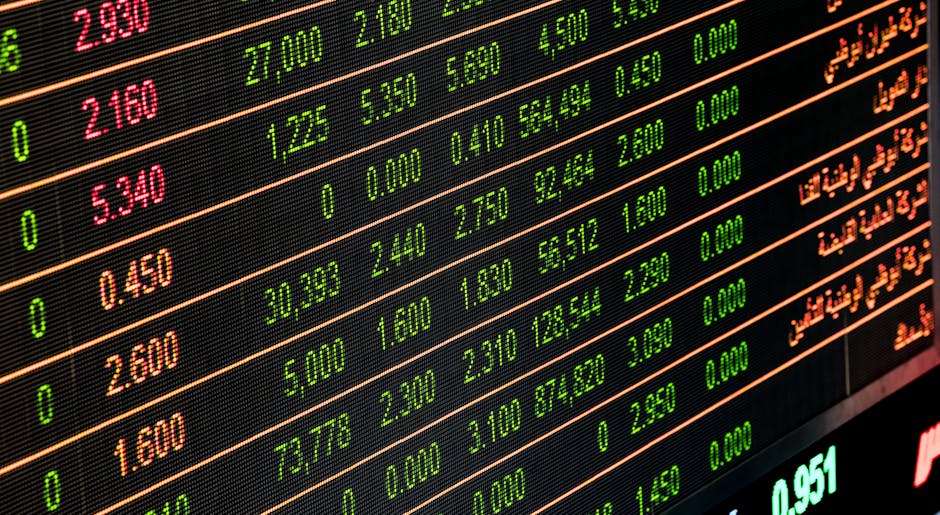
Indonesia's benchmark Jakarta Composite Index (IHSG) ended the week's final trading session on Friday (7/10/2026) in positive territory, edging up 0.20 percent, or 11.92 points, to close at 5,924.36. The gain extended a positive trend from the previous session, though its pace lagged well behind the sharper rallies recorded on Wall Street and in Singapore over the same period.
Throughout the session, the IHSG opened higher at 5,936.04 before slipping to an intraday low of 5,887.83, then reversed course to close near its daily high of 5,949.99. Transaction value reached Rp8.86 trillion, with trading volume of 18.51 billion shares changing hands across 1.92 million transactions.
A total of 364 stocks advanced, 241 declined, and 185 were unchanged. Eight of eleven sectors closed in positive territory, led by the energy sector, which jumped 0.91 percent, while the industrial sector was the biggest drag, falling 0.48 percent.
On the foreign flows side, investors booked a net sell of Rp284.90 billion, though the selling pressure was relatively contained and not enough to drag the index back into negative territory.
Today's gain in the IHSG was driven by improving geopolitical sentiment after signals from US President Donald Trump that peace negotiations with Iran would continue, alongside the IMF's July 2026 World Economic Outlook (WEO) report, which maintained its growth forecast for Indonesia at 5.0 percent for 2026 and 5.1 percent for 2027 — still above the projected global average of just 3.0 percent, as well as the ASEAN-5 regional average of around 4.1 percent.
The rupiah also appreciated 0.35 percent to the Rp18,050–18,065 per US dollar range at the same close.
Compared with regional peers, the IHSG's advance fell well short of the Singapore Exchange's performance.
The Straits Times Index (STI) closed up 0.7 percent, or 35.41 points, to 5,469.29 on the same day, trading in a range of 5,412.51 to 5,472.10. The STI's rally was underpinned by investor optimism over continued strong demand for chips and artificial intelligence (AI) infrastructure, in line with a broader rally in technology stocks across global markets.
A similar sentiment was reflected on Wall Street at Thursday's close US time (7/9/2026), which served as the overnight cue for Asian markets the following day.
The Dow Jones Industrial Average rose 0.27 percent, or 139.02 points, to 52,487.41; the S&P 500 climbed 0.81 percent to 7,543.64; while the Nasdaq Composite posted the sharpest gain among the three, up 1.30 percent to 26,206.89. Wall Street's rally was fueled by a surge in chip stocks, with Micron Technology jumping 4.5 percent and SanDisk soaring 7.6 percent, even as military tensions between the US and Iran continued.
The pattern across all three markets was fairly consistent: positive sentiment stemming from hopes of easing Middle East tensions and optimism around the AI technology cycle served as the main drivers in Jakarta, Singapore, and on Wall Street alike.
Yet the magnitude of the gains diverged sharply — the tech-heavy Nasdaq and the STI, both laden with AI-linked and financial-sector stocks, posted significant advances, while the IHSG, whose composition leans more heavily toward banking and domestic commodity stocks, moved far more moderately, held back by net foreign selling and lingering concerns over the S&P Dow Jones index reclassification review that had weighed on the IHSG earlier in the week.