
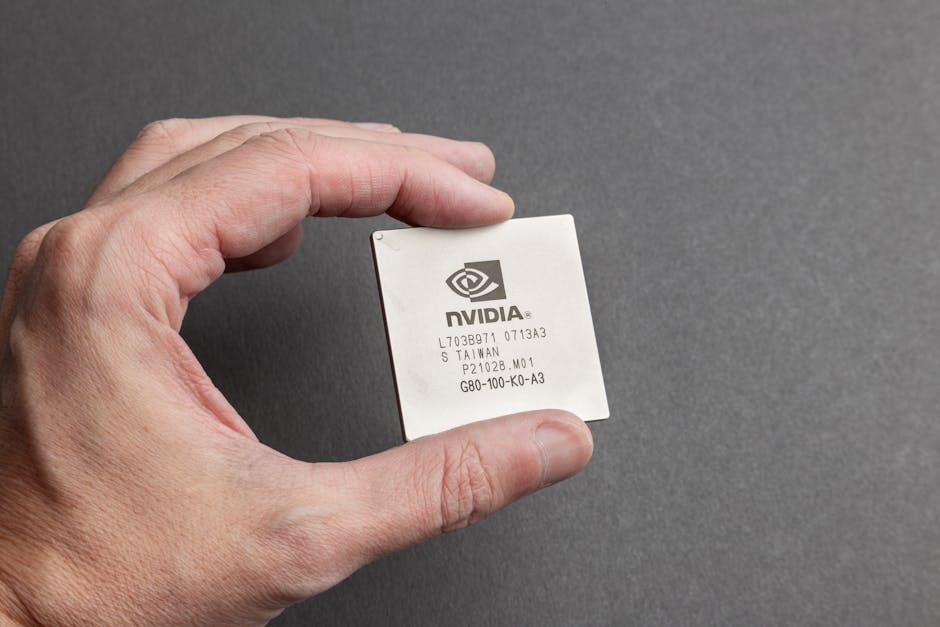
In September 2025, Nvidia announced plans to invest up to $100 billion in OpenAI, a figure that sounded absurd even by Silicon Valley standards. Four months later, the Wall Street Journal reported the deal was "on ice." By March 2026, Nvidia CEO Jensen Huang admitted the $30 billion already committed might be "the last time" the company invests in OpenAI, and the remaining $100 billion option was "not in the cards."
If you're wondering why one shelved deal made headlines, that's exactly where the real story sits. The combined value of seven US tech giants — Nvidia, Apple, Microsoft, Amazon, Alphabet, Meta, and Tesla — has crossed $23 trillion and now controls roughly 34-35% of the entire S&P 500's market capitalization as of June 2026, according to data from market trackers including MacroMicro and analysis from Forbes. Nvidia alone is the single largest weight in the index, at around 7.5%. That means if you own an index fund claiming to track "the broad US stock market," a third of it is really just seven names. And the growth story behind most of those names now rests on one enormous bet: artificial intelligence.
A Gap Few People Are Talking About
What's more revealing than the size of these seven stocks is how far their market value has run ahead of the profits they actually generate. Analysis from Armstrong Fleming & Moore found that, as of early 2026, the ten largest companies in the S&P 500 accounted for roughly 38% of the index's market value but only 31% of its total earnings. A seven-point gap looks small on paper, but across an index worth tens of trillions of dollars, that's the dollar equivalent of investors having already priced in a future that hasn't arrived yet.
Money Circling Back and Getting Called "Growth"
This is the part rarely spelled out in mainstream coverage, even though it's the actual core of the worry: a large share of the "demand" driving AI valuations has been money moving in a closed loop among the same small group of players.
The pattern runs roughly like this. Nvidia puts capital into OpenAI. OpenAI uses part of that money to buy computing capacity from Microsoft and Oracle. Microsoft and Oracle, in turn, spend on Nvidia chips to build that capacity out. The cash flows back to where it started, and each pass gets booked as "revenue" or an "investment commitment" on someone's balance sheet. 2026 market analyses put the total value of these arrangements above $800 billion, including:
- Nvidia's commitment of up to $100 billion in OpenAI (now stalled, as noted above)
- AMD's $200 billion contract with OpenAI, paired with equity warrants worth up to 10%
- Oracle's $300 billion cloud infrastructure commitment from OpenAI
- Microsoft's roughly $13 billion investment in OpenAI, much of it delivered as Azure credit rather than cash
- Nvidia and CoreWeave's mutual $6.3 billion cloud services deal, alongside OpenAI's expanded CoreWeave contracts worth up to $22.4 billion
Defenders of this model, including asset manager Janus Henderson, call it a "virtuous circle," arguing that top-tier AI chips are genuinely scarce and expensive, so suppliers and buyers locking in commitments through shared financing is a rational response. Anthropic CEO Dario Amodei laid out the logic plainly at a forum in December 2025: one side has the capital and an interest in selling chips, the other is confident revenue will show up eventually but doesn't have the cash on hand today.
The trouble is the numbers behind that confidence aren't as clean as the narrative suggests. OpenAI is projected to lose around $14 billion in 2026, nearly triple the prior year's loss, while still projecting $100 billion in revenue by 2029. An MIT study circulating in August 2025 found that 95% of organizations piloting generative AI had seen no measurable return, a finding that briefly knocked Nvidia and Microsoft shares lower.
What This Actually Costs You in Dollars
Percentages are easy to skim past, so let's make one concrete. Say you hold $20,000 in an S&P 500 index fund. With the Magnificent Seven's weight sitting around 34%, roughly $6,800 of that portfolio is riding on the fate of seven companies, not the 500 most people picture when they hear the word "index." Of that, about $1,500 sits in a single name: Nvidia. If the AI narrative stumbles, it isn't just "the tech sector" that takes a hit in your account. One company can drag down a fifth of your position on its own.
The Debate Isn't Settled
Not everyone agrees this is a bubble waiting to pop. A Bank of America survey of global fund managers captured a sharp swing in sentiment: 45% of respondents named an "AI bubble" as the market's biggest tail risk in November 2025, up from just 11% in September. But the optimistic camp has a real argument too. Vendor financing isn't new — early-generation railroads and telecom both grew through similar arrangements — and some AI compute demand genuinely does come from enterprises and developers outside this circle, paying in real cash rather than shared credit.
What's different this time is the scale of debt involved. Morgan Stanley projects bond issuance from hyperscalers like Microsoft and Meta could reach $250-300 billion in 2026, a surge that could push the investment-grade corporate bond market to a record year. Companies long known for sitting on piles of cash are now increasingly leaning on debt to fund data center buildouts. Higher leverage means a thinner cushion if AI revenue doesn't arrive on the timeline everyone's counting on.
What's Worth Watching, Not Fearing
If you're exposed to these stocks through an index fund, a retirement account, or an ETF, the sensible move isn't to sell everything at once. High concentration cuts both ways — it's added real risk, but it's also driven three straight years of outsized returns. What's more useful is knowing exactly how much of your portfolio actually depends on these seven names, then tracking a few concrete signals instead of just reacting to headlines: whether credit spreads at data center infrastructure providers start widening, whether hyperscalers begin trimming their AI capex guidance in quarterly earnings, and whether megadeals like Nvidia-OpenAI actually get built out or keep getting quietly shelved the way this one did.
If you still want exposure to US stocks but the concentration makes you uneasy, an equal-weight index fund, one that doesn't size positions by market cap, is worth a look as a way to dial that risk back down. Either way, the next time your portfolio is up 20% because "the US market is doing great," it's worth knowing exactly who's actually carrying that number.