
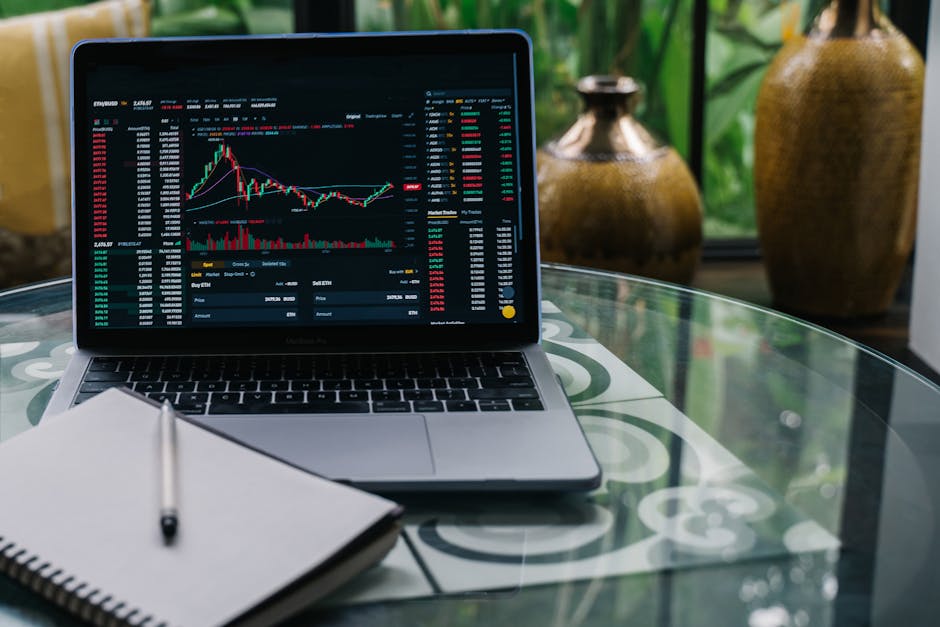
In the 2024–25 fiscal year, individual traders in India's futures and options market lost a combined ₹1.05 lakh crore — roughly $12.6 billion — trading contracts most of them didn't fully understand. Nine out of ten ended the year in the red, according to a study by the country's securities regulator, SEBI. That number alone is alarming. What makes it more interesting is that it isn't an outlier. Swap "India" for "Europe," "options" for "CFDs," or "stocks" for "crypto," and the ratio barely moves.
That's the uncomfortable pattern buried in a decade of regulatory disclosures and academic research: asking which instrument is "riskiest" for retail traders is, in a real sense, the wrong question. The honest answer isn't crypto, or options, or forex specifically — it's how people trade, far more than what they trade.
So Is Crypto Really the Riskiest Bet?
Crypto earns its reputation honestly. A survey of new crypto traders conducted in August 2025 found that 84% lost money in their first year, and 58% lost almost all of their starting capital — poor research and FOMO were the two most-cited mistakes. A Bank for International Settlements working paper on Bitcoin trading patterns estimated that 73–81% of retail crypto investors likely finished at a loss,
largely because they tend to pile in after prices have already risen rather than before. You saw this play out in real time on October 10, 2025, when a geopolitical shock triggered the largest single-day liquidation event in crypto history: more than $19 billion in leveraged positions wiped out within hours, with an estimated 1.6 million trading accounts affected.
But here's the detail that changes the picture — almost all of that damage sat in leveraged derivatives, perpetual futures and margin positions, not in someone who simply bought Bitcoin and left it alone.
By early 2026, Bloomberg was reporting that retail speculative demand was actually rotating out of crypto and into equities. Not because crypto is inherently "riskier" as an asset class, but because the trading style that dominates it — heavy leverage, short holding periods — punishes people faster there than almost anywhere else.
Forex and CFDs Have the Most Honest Numbers, Because Regulators Force It
Nowhere is the picture clearer than in forex and CFD trading, simply because European regulators require brokers to disclose it. Since 2018, the EU's markets regulator, ESMA, has mandated a standardized risk warning after national analyses across EU jurisdictions found that 74–89% of retail CFD accounts lose money, with average losses per losing client ranging from €1,600 to €29,000.
Individual broker disclosures bear this out: recent published figures from CMC Markets UK and IG UK, two of the industry's largest platforms, sit around 68%, while the U.S. CFTC reports a comparable 70–80% loss rate among retail forex traders. This isn't buried data. It's printed on nearly every CFD advertisement you've probably scrolled past without reading the fine print.
Options Traders Lose to the Math, Not Just Bad Luck
Options are where losing starts to feel almost structural rather than accidental. Zero-days-to-expiry contracts — options that trade and expire the same day — now account for more than half of S&P 500 index options volume, and retail traders make up roughly 50–60% of that flow. A widely cited analysis of actual retail options fills between 2019 and 2021 found retail traders were net losers in aggregate once bid-ask spreads and adverse selection against faster market-making firms were accounted for; a separate London Business School calculation put the resulting cost at more than $2 billion in lost premium over that period alone.
More recently, a 2025 study from the University of Florida's Warrington College of Business found retail traders using complex multi-leg options lost money across every holding period measured, averaging a 16.4% loss over just three days — with losses roughly tripling around earnings announcements, exactly when retail traders feel most confident they've spotted an edge.
Is Plain Stock Day Trading Any Safer?
If you assume ordinary stock trading avoids all this, the data disagrees — as long as you're trading actively rather than holding. The most rigorous study on record tracked nearly 20,000 individuals who began day trading Brazilian equity futures between 2013 and 2015. Of those who persisted for more than 300 trading days, 97% lost money, and only 1.1% earned more than Brazil's minimum wage, with no evidence that any of them improved with practice over time.
A separate analysis of the entire Taiwan Stock Exchange from 1992 to 2006 found fewer than 1% of day traders earned consistent profits after fees. And Brad Barber and Terrance Odean's classic study of U.S. brokerage accounts found the most active traders underperformed the least active ones by roughly 7 percentage points a year — not because they picked worse stocks, but because they traded too much of whatever stock they picked.
The Pattern That Actually Explains All of This
So what connects a Brazilian futures trader, a European CFD client, an Indian options buyer, and a crypto day trader? Behavioral economists named it back in 1985: the disposition effect — the tendency to sell winning positions too early and hold losing ones too long, rooted in the loss aversion that Daniel Kahneman and Amos Tversky described in prospect theory.
You've probably felt this yourself, if you've ever held a losing position "until it comes back" while cashing out a small gain the moment it appeared. One analysis of 25,000 retail traders found that 65% of them actually had a win rate above 50% — they were right more often than wrong — yet 82% still lost money overall, because their average losing trade cost 2.8%, more than double the 1.2% they typically banked on a winner. The instrument barely matters when the exit behavior is identical everywhere.
What This Looks Like With Real Numbers
Picture two people who each put $10,000 into the market this year. The first trades actively — leveraged CFDs, 0DTE options, whatever's moving — closing winners fast and holding losers while hoping for a recovery, paying spread and time decay on every round trip. Based on the loss rates above, they face somewhere between a 70% and 97% chance of ending the year with less than they started, almost regardless of whether the instrument was crypto, forex, or options.
The second buys a diversified fund and does nothing. They aren't guaranteed a profit — markets fall — but they aren't fighting spread costs, funding rates, and their own loss aversion on every single position. Same starting capital, same market conditions, radically different odds of finishing ahead.
None of this means crypto, options, or CFDs are inherently fraudulent, and none of it means you're guaranteed to lose the moment you open an account. What the data across every regulator and every academic study actually converges on is narrower and more useful than "avoid this asset class": the moment leverage, short holding periods, and frequent trading enter the picture, the odds move against you at a remarkably similar rate no matter which asset you picked.
Before your next trade, the more useful question probably isn't which market is safer — it's how many trades you're planning to make this month, and whether you'd still hold this position if you couldn't check the price again for a year.